

Building the Workforce Behind the AI Economy
Amazon is investing in one of the largest infrastructure expansions in modern history. YUPRO Placement is helping build the talent pipeline to support it.
Riding on a wave of demand for data center infrastructure, Amazon announced $100 billion in capital expenditures in 2025. CEO Andy Jassy indicated that the majority of that spend would support AWS infrastructure and AI-related computing capacity. Industry analysts have suggested annual infrastructure spending could approach $200 billion in the years ahead. To put that into context, Amazon is now investing more in data centers and AI infrastructure than it historically spent building its more than 1,300 domestic warehouses, fulfillment centers, and related capabilities.
However, while the development of technology and capital infrastructure is mammoth, Amazon has recognized another more vexing challenge: talent. While they may employ fewer people than a manufacturing plant of comparable size, data centers require a significant number of highly specialized roles. And those roles are increasingly difficult to fill among local populations.
In order for these large infrastructure investments to pay off, Amazon needed to look beyond traditional recruiting strategies and toward workforce-development models capable of creating regional talent pipelines.
An initiative emerged to build programs that bridge recruiting, training, and placement through strategic partnerships. Amazon Web Services Information Infrastructure Pre-Apprenticeship Program, known as AWS I2PA, was developed through a partnership among AWS, workforce-development organization Eleven Tenths, and YUPRO Placement. The initiative creates direct pathways into careers supporting the information infrastructure economy.

The Workforce Need Behind AI
Much of the public conversation surrounding artificial intelligence focuses on what the technology can do with comparatively little attention paid to the workforce required to support it.
Yet every new AI application ultimately depends on physical infrastructure. Data centers require power, electrical systems, maintenance, and support. That reality is creating new opportunities for employers, workforce organizations, educational institutions, and workers themselves. It’s also forcing a reevaluation of how talent pipelines are built.
Data centers are sometimes perceived as highly automated environments requiring relatively few workers. But modern, hyperscale data centers rely on a diverse workforce spanning technical, mechanical, electrical, operational, and security disciplines. Technicians, fiber specialists, network operators, electricians, HVAC specialists, facilities engineers, logistics personnel, and operations managers all play essential roles in maintaining the systems that keep vital digital infrastructure running twenty-four hours a day.
Many data centers are also being constructed in areas with very little high-paid, future-facing opportunities. In other words, the gap is not in opportunities, but rather in finding skilled local talent that can take advantage of those opportunities.
Programs like AWS I2PA look to close this gap by building a future workforce to support data centers not with traditional technology pathways but through adjacent industries, overlooked communities, career changers, and individuals whose capabilities are broader than their resumes indicate.
Building Talent Pipelines
With its partners Eleven Tenths and YUPRO Placement, AWS I2PA creates direct pathways into careers supporting the information infrastructure economy. The program trains talent in the skills centered on operating the physical systems that underpin digital operations, including electrical infrastructure, fiber networks, cooling systems, and facility operations.
This recruiting and training approach reflects a broader shift occurring across workforce development. As major employers like Amazon invest billions of dollars in physical infrastructure, they are increasingly recognizing that talent pipelines must be built alongside buildings, power systems, and network capacity.
“Employers can’t do this in a bubble,” says Michelle Sims, CEO of YUPRO Placement. “They need to build local partnerships in communities so that communities thrive along with innovation and data center infrastructure. Everyone in the ecosystem benefits from this approach.”
Amazon brings visibility into long-term infrastructure demand and the skills required to support it. Eleven Tenths designs and manages the training framework, translating industry needs into a structured learning experience. YUPRO Placement serves as talent acquisition through sourcing, screening, and placing apprentices in the program and serving as the employer of record during the paid training program. YUPRO Placement remains engaged throughout the program, providing wraparound supports, and career coaching, to prepare apprentices for job interviews post training.
Data center careers are relatively unknown in the very regions they are being constructed. Building awareness, generating interest, evaluating candidates, and helping participants understand the long-term potential of these roles requires a different set of capabilities than technical instruction alone. In many ways, YUPRO Placement functions as the connection between workforce opportunity and workforce readiness, ensuring that promising candidates not only discover the program but successfully navigate it.
Together, the three organizations create something larger than a training program, they build workforce infrastructure and sustainable talent ecosystems where they’re needed most. To that end, cohorts are launched where Amazon is making significant community investments: Georgia, Indiana, Mississippi, Ohio, Oregon, Pennsylvania, and Virginia.

Community Colleges as Workforce Infrastructure
Another critical component to the program comes through partnerships with community and technical colleges. AWS I2PA joins forces with institutions that already have the facilities, equipment, and instructional expertise necessary to teach skilled trades and technical disciplines. Colleges such as Holmes Community College in Mississippi, Ivy Tech Community College in Indiana, Northern Virginia Community College, and Blue Mountain Community College in Oregon provide classroom space, technical laboratories, instructors, and workforce-development resources.
AWS I2PA supplements that experience through facility tours, employer engagement, guest instructors, and exposure to real-world operating environments. The result is a learning experience that blends classroom instruction with direct industry access.
The model recognizes that building talent pipelines is effective through leveraging the community resources and infrastructure already in place.
Rethinking Qualified Talent
Well beyond its role as employer of record, YUPRO Placement leads recruiting, candidate engagement, and apprentice support efforts across multiple cohorts and multiple states. In most markets, demand for the program far outstrips available seats. The more complex task was identifying individuals with the aptitude, commitment, and persistence to successfully complete the program and transition into an entirely new career pathway.
“The only three requirements on paper were that apprentices needed to be at least 18-years-old, possess a high school diploma or GED, and be within a commutable distance to the training site,” says Alyssa Sweet, Director of Delivery, Strategic Alliances of YUPRO Placement. “Then, a months-long vetting and interviewing process was necessary for us to select the best candidates for this highly-sought-after opportunity.”
After hundreds of applications, 100 candidates are interviewed and only 22 apprentices are chosen for each cohort. The strongest candidates were often not those with the most relevant resumes or even job experience. Instead, they were individuals who demonstrated adaptability, reliability, curiosity, and a willingness to learn.
Some participants came from warehouse environments. Others had worked in manufacturing, retail, construction, education, logistics, or customer service. Many had never set foot inside a data center before beginning the program.
After completing a software-development pathway and navigating layoffs in the technology sector, a candidate living in California learned about an AWS I2PA cohort being offered in Mississippi. During conversations with YUPRO Placement recruiters, he explained that he had family in the region and was willing to relocate if selected.
Sweet remembers the conversation clearly.
“How fast can you get there?” she recalls asking.
The candidate packed his car, drove across the country, completed the program, and ultimately secured a position as a Data Center Operations Technician. Within months, he had already begun discussing future advancement opportunities. He recently celebrated his two-year work anniversary with Amazon. You can read his first-person account here: https://medium.com/@hansontram/from-cloud-to-infrastructure-my-aws-i2pa-pre-apprenticeship-program-experience-93c95a2c6bbf
“This story highlights that workforce shortages are not always caused by a lack of capable people,” says Sims. “Often, they stem from a lack of visible pathways connecting motivated individuals to emerging opportunities.”
It’s an observation that challenges the longstanding assumption that employers must hire individuals who have already performed a role in order to be successful. In rapidly expanding industries, that approach quickly becomes unsustainable because demand outpaces the available talent pool.
Training for the Infrastructure Economy
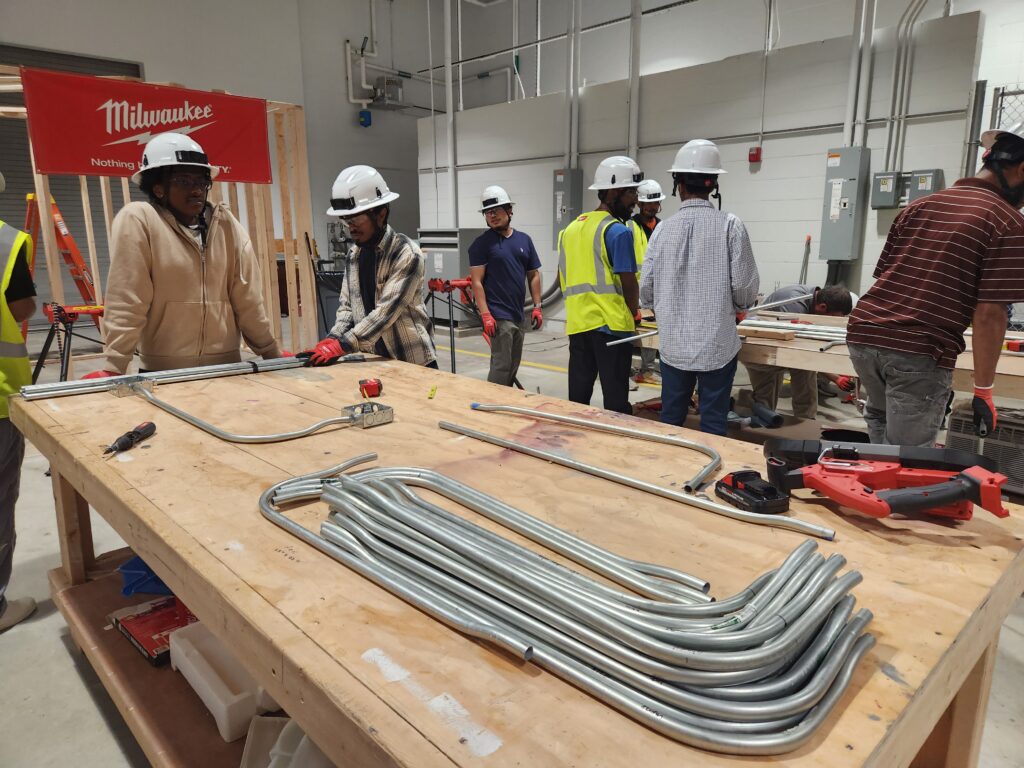
Selected participants enter a four-week, 120-hour paid pre-apprenticeship experience designed to expose them to the fundamentals of data center infrastructure. Training covers areas such as electrical systems, cooling infrastructure, fiber optics, blueprint reading, OSHA safety standards, and operational procedures commonly found within modern facilities.
The goal is not to create fully formed experts in a matter of weeks. Rather, it is to provide foundational knowledge, industry exposure, and a pathway into occupations that many participants previously did not know existed.
At the conclusion of the program, participants earn industry-recognized credentials and connect directly with employers seeking talent for these rapidly growing sectors.
Technical Skills Are Not Enough
While much of the curriculum focuses on required technical skills, YUPRO Placement contributes a different layer of vital preparation.
Participants receive training in what workforce professionals often call durable skills: communication, professionalism, collaboration, workplace expectations, conflict resolution, interviewing, resume development, and career readiness. These traditional “soft skills” help workers navigate professional environments long after technical training has ended.
Sweet believes these capabilities are frequently overlooked despite being essential to long-term career success.
“We’re not expecting them to come to us with these skills,” she says. “We’re trying to identify the people who are eager to learn, who are reliable, and who will fully commit to the program.”
For participants entering a new industry, that guidance can be just as valuable as learning how to splice fiber, read blueprints, or troubleshoot mechanical systems.
Investing in People
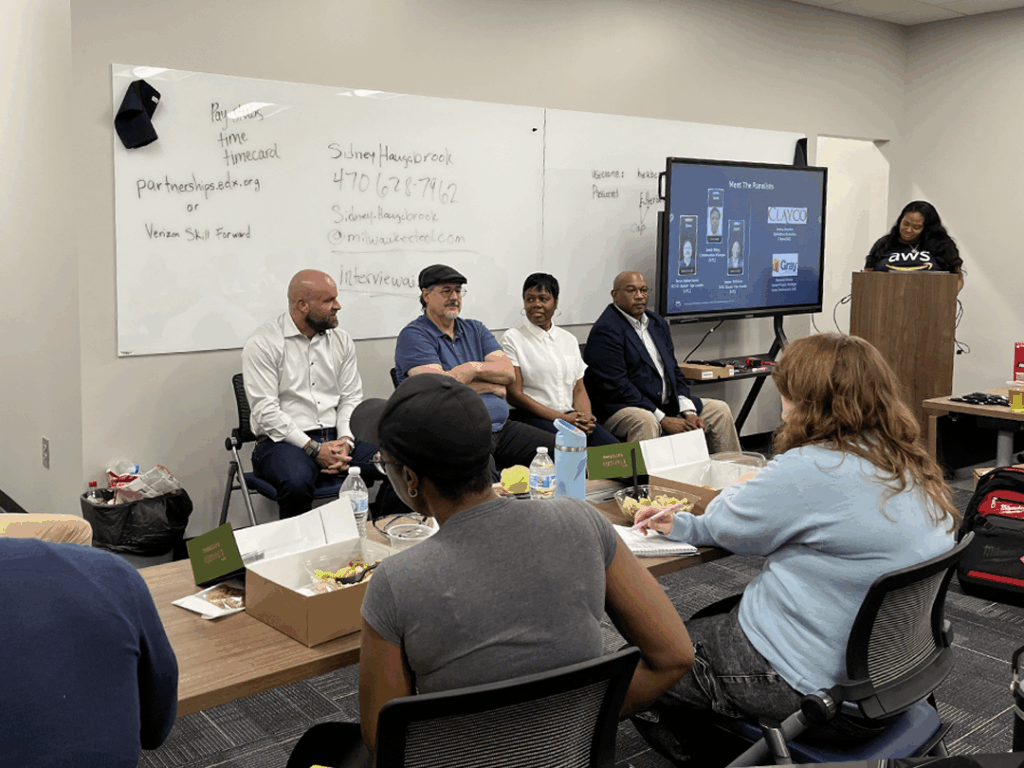
The success of programs like AWS I2PA shows the crucial importance of partnerships both national and local. Infrastructure companies, workforce-development organizations, educational institutions, and talent specialists each bring different capabilities to the table. Amazon, Eleven Tenths, community colleges, and YUPRO Placement are tackling different aspects of the same challenge: ensuring that workforce capacity grows alongside infrastructure capacity.
“This productive partnership is a great example of how to build a sustainable talent infrastructure that fuels both businesses and the communities they serve,” says Sims.
Sweet sees the program as a reminder that talent is often hiding in plain sight: “People are hungry for opportunities. And they’re looking for someone to invest in them.”

Stay Up-to-Date with the Latest on Skills-First Hiring Resources
Sign up for YUPRO Placement Emails
"*" indicates required fields